

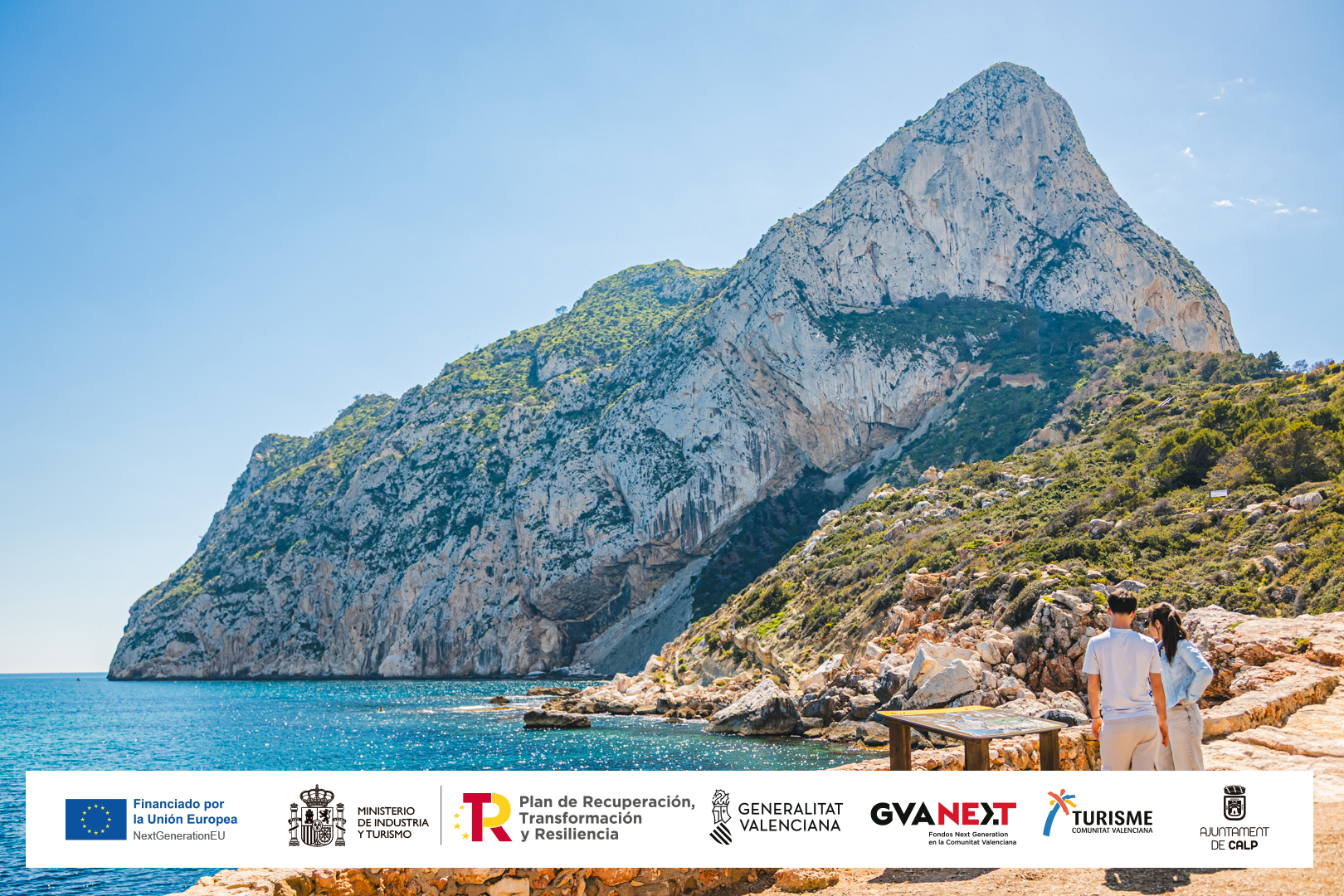
The Calp Town Council has formally applied to join the World Tourism Organization's International Network of Sustainable Tourism Observatories (INSTO).
The network comprises destinations committed to assessing the economic, environmental, and social impact of tourism. This will facilitate decision-making and the implementation of initiatives that promote sustainable tourism.
In this way, Calp reaffirms its commitment to positioning itself as a sustainable tourist destination, connected to the local area and respectful of its natural resources, while also working to ensure that tourists perceive these qualities during their visits to the municipality. Sustainability is, in fact, a fundamental pillar for smart tourism destinations, a model promoted by the Department of Tourism since 2017 to transform Calp into a Smart Tourism Destination (STD).
The application to join the INSTO network comes after Calp adopted the ETIS Indicators System (European Tourism Indicators System), with the aim of incorporating sustainability criteria into the municipality and the management of existing tourism services. This is a management, information, and monitoring tool for tourist destinations, promoted by the European Union, which includes indicators related to water and energy consumption, resident and tourist satisfaction, accessibility, heritage conservation, social cohesion, and tourism's contribution to the local economy.
The implementation of this system was carried out through a contract for "Consulting Services for the Incorporation of the Town into the ETIS Tourism Sustainability System," at a cost of €29,023.06, which included, as an improvement, the processing of Calp's application to join the INSTO network. In fact, having the ETIS indicators was a prerequisite for joining the INSTO network.
Both the adoption of the ETIS Indicators System and the application to join this international network are actions included in Calp's Tourism Sustainability Destination Plan (PSTD), within the framework of the Recovery, Transformation and Resilience Plan, financed by Next Generation EU funds.
Calp is one of the first Spanish cities of its size to apply to join this international network, which in Spain includes capital cities, regions, and autonomous communities such as Navarre, the Canary Islands, Mallorca, Barcelona, Málaga, and Biscay.
The INSTO network was created in 2004 by the World Tourism Organization to promote the systematic and continuous monitoring of the impact of tourism on destinations, fostering data-driven management that contributes to long-term economic, social, and environmental sustainability.