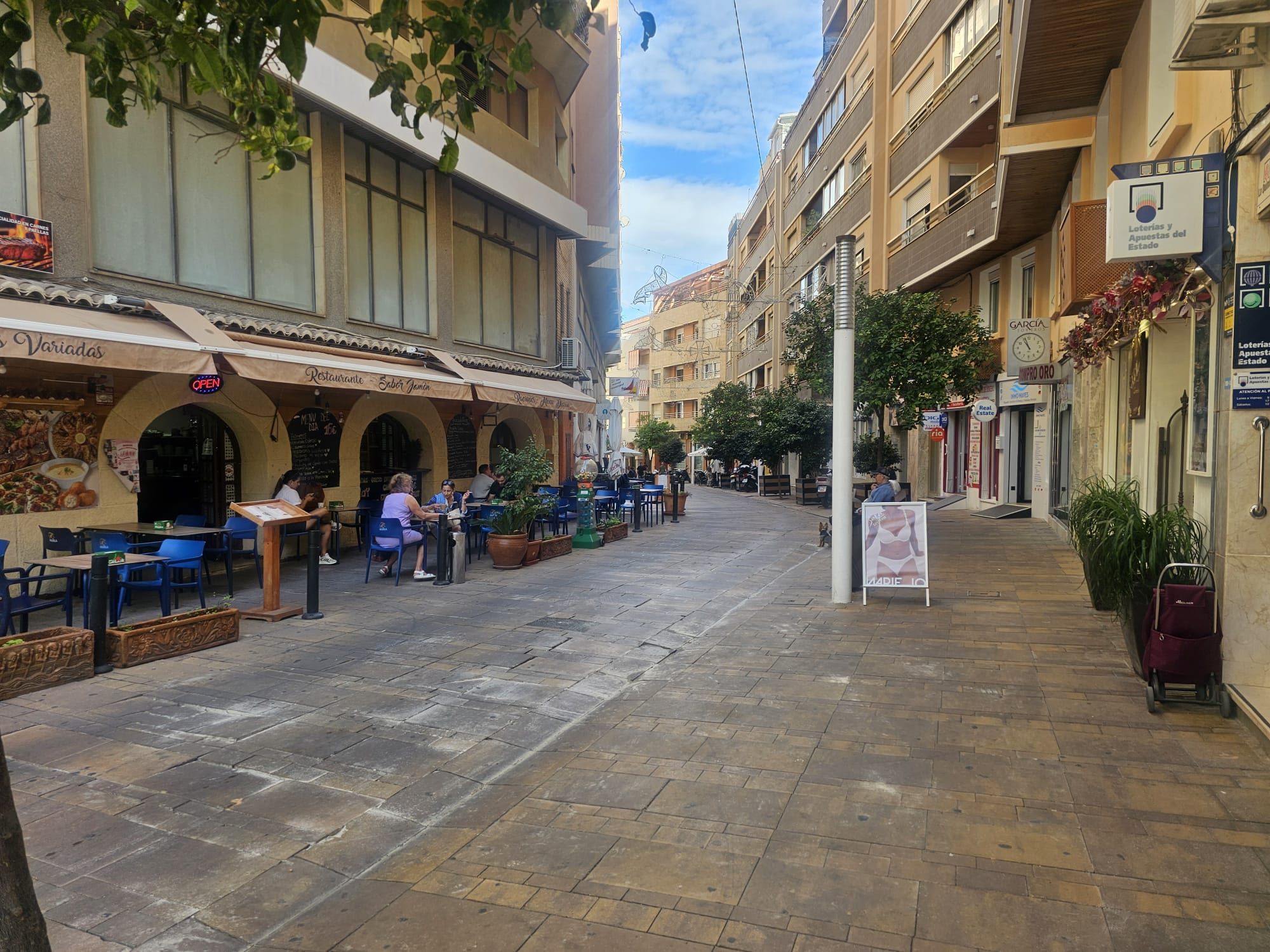


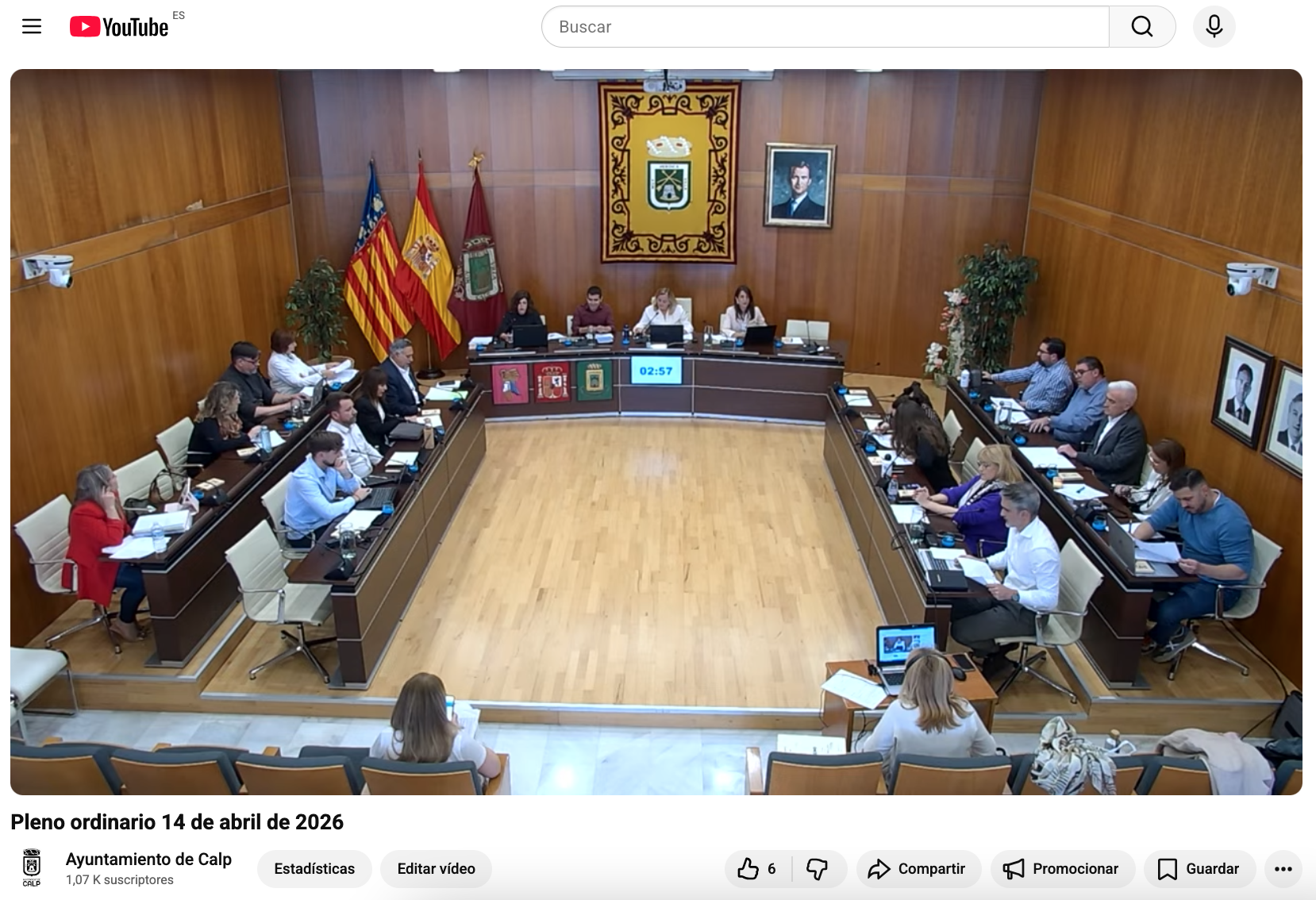
The Calp City Council, in its plenary session held yesterday, April 14, agreed to continue with the procedure for approving Amendment D-16 to the General Urban Development Plan (PGOU). This urban planning initiative aims to prevent residential use of the ground floors of multi-family buildings throughout the municipality, thus preserving these spaces for their commercial and economic function.
The proposal modifies Article 8 of the PGOU's Urban Planning Regulations to explicitly state that residential use of the ground floor will not be permitted in multi-family buildings. This is defined as dwellings with direct access from the street or from the ground floor of the building without passing through other floors. With this measure, the City Council intends to prevent the conversion of commercial premises into housing and thereby protect the social fabric and local businesses of the municipality.
The decision stems from a process initiated in 2024, when the City Council agreed to suspend, throughout the municipality, the processing and granting of licenses for changes of use from commercial premises to residential units in multi-family buildings, in order to study a modification of the urban planning regulations. Since then, the corresponding simplified strategic environmental and territorial assessment process has been carried out, gathering reports from various administrations and municipal departments.
Among the reports issued are the favorable ones from the Alicante Territorial Planning Service, the Júcar River Basin Authority, the Regional Ministry responsible for coastal issues, and the Ministry for Ecological Transition and the Demographic Challenge, which endorse the viability of the proposal and allow its processing to continue. Likewise, the municipal reports from the Departments of Equality and Economic Development have supported the modification, considering that it contributes to preserving local businesses, urban vitality, and public safety.
The report from the Economic Development Department has been particularly relevant, warning that converting commercial premises into housing, and especially tourist accommodations, would raise property prices and hinder the establishment of small businesses, negatively impacting the destination's competitiveness and the quality of its urban and commercial offerings.
The solution ultimately adopted extends the ban to the entire municipality, after analyzing the whole area and assessing the commercial character of each street and the urban planning coherence of the measure. In this way, the municipal government has opted for a uniform regulation that generally protects the balance between economic activity, residential use, and urban quality.
Statements
The Councillor for Tourism Planning and Housing, Mireia Ripoll, explained that "with the support of the Tourism Council, we have opted for the most restrictive measure, as we do not want premises in Calpe to be converted into homes, primarily to protect the local business sector and shops. We cannot guarantee that if a premises is converted into a dwelling, it will be for permanent residence and not for tourism."
For his part, Toni Tur, from Defendamos Calpe (Let's Defend Calpe), stated that "we do not want Calpe to end up as a theme park, and this amendment aims to prevent that from happening, although there are areas for improvement." He added that "if this practice of converting commercial premises into homes continues, small businesses, which are so essential for meeting our needs and for uniting us as a community and as a group, will gradually disappear."
Miguel Crespo, spokesperson for the Popular Party's municipal group, stated that "it's too late now, since after two years of suspension, no definitive solution has been found, while the housing access problem has only worsened. Today, a modification is being proposed that further limits the possibility of creating housing in our municipality, focusing solely on one aspect of the problem—tourist rentals—while failing to guarantee the protection of small businesses."
Marco Bittner, Councilor for Tourism Promotion and member of the Socialist municipal group, affirmed that "the problem we have is that housing is a lucrative investment that generates a lot of money, and if we open the possibility of converting commercial premises into housing, they will most likely end up as tourist accommodation. Therefore, the premises will remain commercial premises until we find a legal measure that allows us to convert them into permanent residences."
From Somos Calpe, spokesperson Rebeca Merchán emphasized that "this decision was approved by the Tourism Council, which includes representatives from associations and individuals with a stake in tourism, and it exemplifies citizen participation."
The mayor of Calp, Ana Sala, added that "we are not prohibiting... We are regulating a need that the municipality has because the requests for change of use from premises to housing were getting out of hand; Therefore, two years ago an extension was approved to study a solution with all parties involved, and an agreement was reached, which is the one we have presented today.”
Declaration of the Moors and Christians Festival
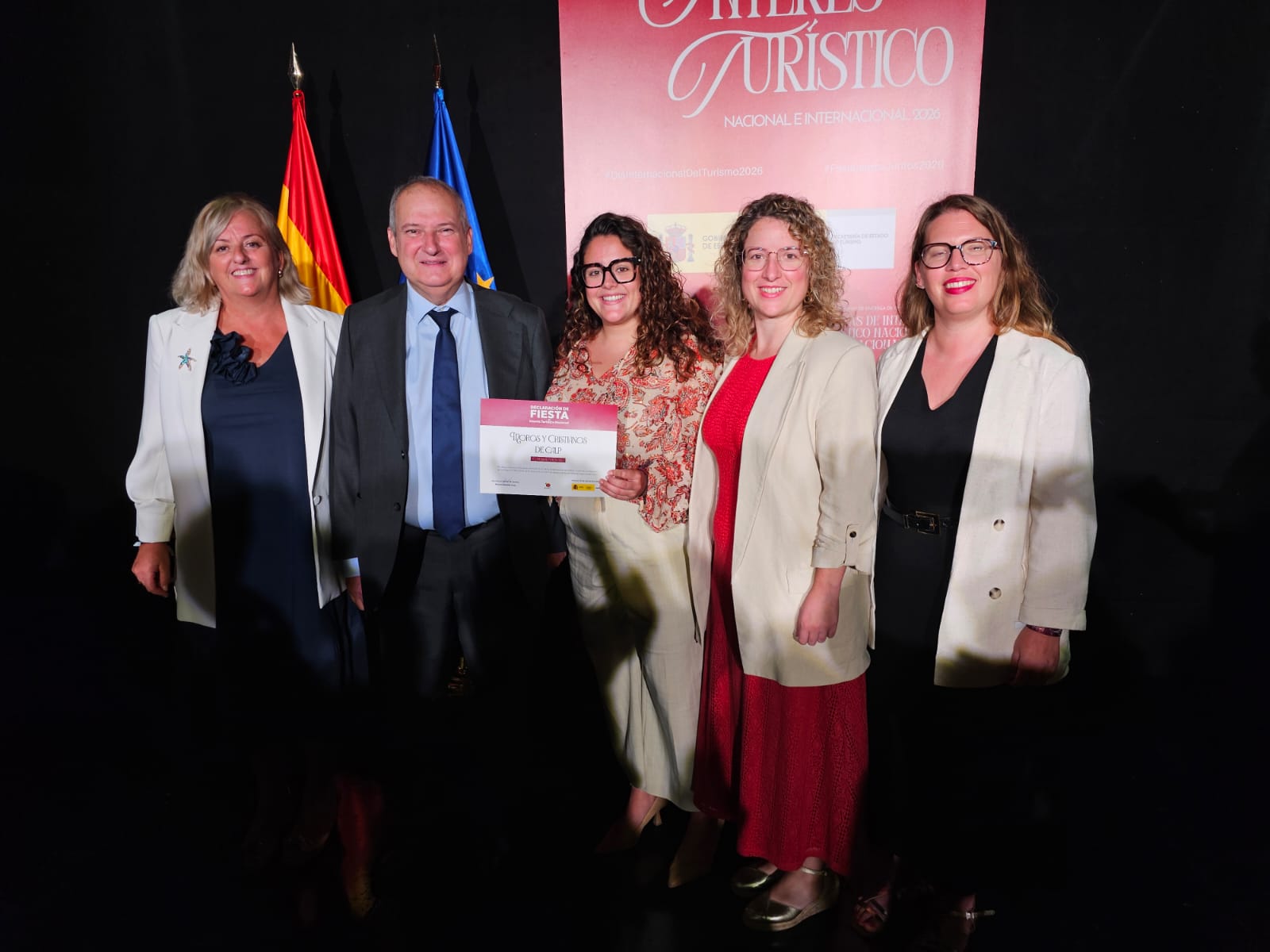
In yesterday's plenary session, the formal request to the Spanish Ministry of Industry and Tourism was also approved, requesting that the Moors and Christians Festival of Calp be declared a Festival of National Tourist Interest. This recognition is intended to strengthen the visibility and prestige of one of the municipality's most emblematic celebrations.
The Moors and Christians Festival has been celebrated in Calp since 1977 and is organized by the Moors and Christians Association, with the collaboration of the Festival Committee. It is a celebration that combines religious, popular, and historical events and, since 2013, has held the designation of Festival of Regional Tourist Interest.
The initiative approved by the plenary session is part of the objectives outlined in Calp's Strategic Tourism Plan, which includes among its lines of action the promotion and The aim is to promote the municipality's tourism offerings both nationally and internationally. This will strengthen Calp's attractive and competitive image, diversify its tourism offerings, and consolidate its position in key source markets.
The plenary agreement first approves the formal application to the Ministry of Industry and Tourism. It has also forwarded the application to the Department of Tourism to continue processing it, beginning with requesting the required favorable report from the Valencian Regional Government, as stipulated by national regulations. Once this report is obtained, the application will be submitted to the Spanish Government to finalize the process."